


Operations, Safety, and Compliance
Understanding Securement Types: Choosing the Right Method for Safer Hauls
June 3, 2026Whether you are new to flatbed or have decades of experience under your belt, securement is just as important as loading. The right type of securement helps protect the cargo, your equipment, and everyone out on the road. Not to mention, helping drivers like you comply with cargo securement standards.
Why Securement Matters
Cargo must be firmly immobilized using a securement system with enough working load limit (WLL) to hold the load in place. In general, the total WLL of the securement system must be at least one-half the weight of the cargo being secured. That means choosing the right method is not just about convenience; it is about matching the securement setup to the freight type and its movement risk.
Direct vs Indirect Securement
There are two basic approaches to cargo securement: direct and indirect. Direct securement runs from the trailer directly to the load, while indirect securement goes from one side of the trailer, over or through the cargo, and back to the trailer.
Indirect securement often allows better use of the tie-down’s full WLL because the force is spread across the load and anchored on the opposite sides of the trailer. Direct securement, on the other hand, places the securement force more directly on the tie-down points and may reduce how efficiently the load is stabilized.
Common Securement Types
Different cargo calls for different securement methods. The attached materials highlight several specialized coil and transformer securement setups that are commonly used in flatbed hauling.
- Eye-to-side coil securement: This setup is used for steel coils and relies on coil racks, beveled lumber, edge protection, and chains arranged according to coil weight.
- Eye-to-front coil securement: This method uses X-pattern chains through the eye of the coil and requires specific chain counts based on the coil weight.
- Skidded coil securement: This approach uses chains over the coil, including an X over the top and a trip chain at the front to help prevent shifting.
- Aluminum coil securement: This method uses straps over the top of the coil and a trip chain at the front to keep the load stable.
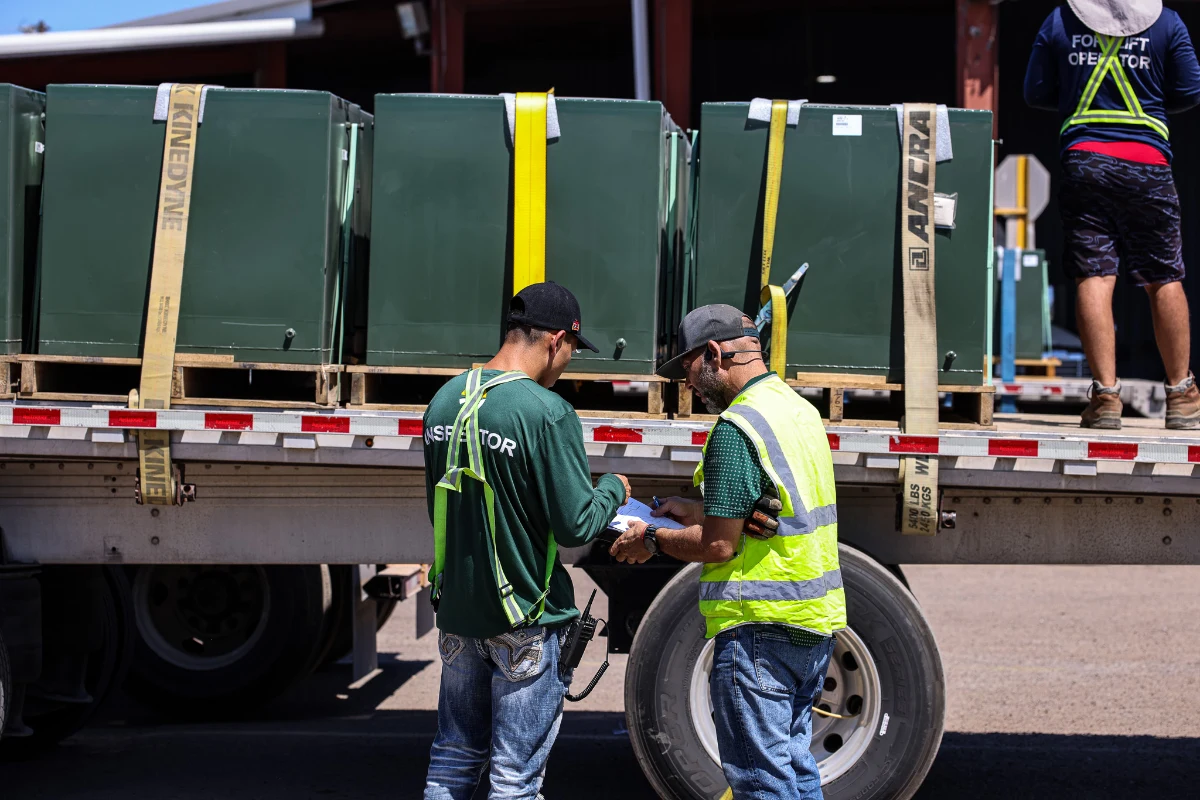
- Transformer securement: For transformers, the securement may use chains through hooks or straps with foam protection to avoid damage to sensitive parts.
What Makes Securement Different by Load
The biggest difference between securement types is the shape, weight, and movement tendency of the freight. Coils are heavy and round, so they require blocking, racks, and carefully placed chains to stop rolling. Transformers are more square and equipment-sensitive, so the focus is often on protecting the unit from damage while keeping it firmly anchored.
Some shipments also have special handling rules. For example, the transformer materias note not to damage radiators, not to break pallets, and to use foam protection or proper contact points when required. Coil securement also emphasizes edge protection, rubber belting, and keeping chains from touching or damaging the load.
Safe Securement Habits
Good securement is not only about the main tie-downs. It also includes checking pallet condition, banding, lumber placement, edge protection, and loose equipment before departure. Drivers should also make sure chains, binders, straps, and other gear are secured so they do not shift during transit.
A practical example: a steel coil may need coil racks, beveled lumber, rubber belting, and a set number of chains based on weight, while a transformer may need chains through specific hooks or straps with foam protection to prevent cosmetic or structural damage. In both cases, the goal is the same: to keep the freight stable and compliant.
Conclusion
This isn’t a one-size-fits-all securement method. The correct choice depends on the cargo type, weight, shape, and handling requirements, which is why drivers and dispatch teams should follow shipment-specific instructions closely. When securement is done right, it supports safer roads, better freight protection, and smoother operations.
Inside Sunline’s Safety Practices: Our Approach to Safe Loading and Unloading
June 3, 2026At Sunline, safety is not just a policy; it is a daily commitment that protects our drivers and staff while at the terminal. Whether loading or unloading, every step in the yard matters. By following these safety practices, we ensure that operations run smoothly while minimizing risk.
SAFETY STARTS BEFORE YOU ENTER
Every safe operation begins with communication and awareness. Drivers are required to check in with office personnel before proceeding to the loading or unloading area. This ensures proper coordination and keeps everyone informed of activity.
PROPER GEAR MATTERS
Personal protective equipment (PPE) is a critical part of staying safe on-site. We ask drivers to always wear required PPE, including safety vests, hard hats, safety glasses, and steel-toe boots.
STAYING SAFE DURING LOADING AND UNLOADING
Patience and awareness play a role in safety during active hours. We ask that drivers remain inside their tractor or commercial motor vehicle (CMV) unless otherwise instructed by yard personnel. For example, staying inside the cab protects drivers from moving equipment during forklift operations.
It is especially important to maintain a safe distance from all moving equipment. The terminal during operational hours is constantly in motion, with many moving parts. Staying clear helps to keep everyone safe and allows for a smooth operation.
ACCOUNTABILITY AND FINAL CHECKS
Our job to keep everyone safe does not end when the loading process is complete. Before leaving the facility, we ask drivers to conduct a final walk-around inspection with our DOT-certified inspectors. This final step ensures the proper securement of the commodity, documentation is complete, and the driver is ready for the road.
SUNLINE’S SAFETY CULTURE
Here, safety is a shared responsibility. By following these safety practices and respecting the guidance of our personnel, we create a safer environment for all. Every safe decision contributes to a stronger, more reliable operation and helps to ensure that every driver coming in and out of the yard has a positive experience.